Categories: Articles,
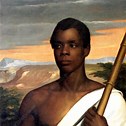
The story of the Amistad should be taught in schools across this nation. It tells of a right to be free in a fight grounded on a determination that the law must be delivered as written and utilized for its designation of rights.
The case opened the truth that slavery did not exist on the natural law but out of man-made laws, a selfish mix of economic, political, social, and racial motivations.
The Amistad court case is credited with being the first civil rights case in the United States. It is a story rank with lies and deception, a massacre inspired by fear on the high seas, international intrigue and the actions of ex-Presidents and other notables from history, set in a time hostile to the notion of a free Black man in courtroom wranglings and precedents.
The African captives who caried out the mutiny on the Amistad had no idea it would become the most famous slave ship rebellion in American history. Taken from Africa and shipped across the Atlantic to be sold to the highest bidder was the plan set in motion for their lives, but they wanted only to regain their freedom by any means necessary.
The incident on the Amistad began in February 1839, when Portuguese slave hunters abducted hundreds of Africans from Mendeland, in present-day Sierra Leone, and transported them to Cuba, which was a Spanish colony.
This continued to occur even though the United States, Britain, Spain, and other European powers had abolished the importation of slaves. The transatlantic slave trade continued illegally, and Havana was an important slave trading hub.
Spanish plantation owners Pedro Montes and Jose Ruiz purchased fifty-three African captives as slaves and set sail from Havana on the Amistad, which means “friendship” in Spanish. They were heading to Puerto Principe, where they owned plantations.
Several days into the journey, one of the Africans, Sengbe Pieh, also known as Joseph Cinque, managed to unshackle himself and his fellow captives and they seized control of the Amistad. They killed the captain and the ship’s cook, who had taunted the captives by telling them they would be killed and eaten when they got to the plantation.
Cinque ordered Montes and Ruiz to turn the ship back to Africa. Knowing the Africans were not knowledgeable about navigation, they changed course and sailed through the Caribbean and up the eastern coast of the United States.
On August 26, the Amistad anchored off the tip of Long Island to get provisions and was seized by naval officers of the U.S. ship Washington. The Africans were put back in chains and taken to Connecticut, where they were human cargo under a claim of salvage rights.
Charged with murder and piracy, Cinque and the other Africans of the Amistad were imprisoned in New Haven. Though criminal charges were dropped, they were kept in prison while the courts decided their legal status because of the property claims by the officers of the Washington, by the plantation owners Montes and Ruiz and the Spanish government.
President Martin Van Buren sought to extradite the Africans to Cuba to pacify Spain. Meanwhile, a group of abolitionists in the North, led by Lewis Tappan, Rev. Joshua Leavitt, and Rev. Simeon Jocelyn, raised money for their legal defense, arguing that the Africans had been illegally captured and imported as slaves.
The defense team enlisted Josiah Gibbs from Yale University. Gibbs searched New York waterfronts for anyone who recognized the language spoken by the Africans. He finally found a speaker who could interpret for the Africans, allowing them to tell their own story for the first time.
In January 1840, a judge in U.S. District Court in Hartford ruled that the Africans were not Spanish slaves, but had been illegally captured, and should be returned to Africa.
The decision of the U.S. District Court was taken to the U.S. Supreme Court in 1841. To defend the Africans in front of the Supreme Court, Attorney Tappan and his fellow abolitionists enlisted former President John Quincy Adams, a member of the House of Representatives who was a strong antislavery voice in Congress.
Adams defended the Africans’ right to fight for their freedom aboard the Amistad. At the heart of the case, Adams argued the willingness of the United States to stand up for the ideals upon which it was founded. “The moment you come to the Declaration of Independence, that every man has a right to life and liberty, an inalienable right, this case is decided,” Adams said. “I ask nothing more on behalf of these unfortunate men, than this Declaration.”
On March 9, 1841, the Supreme Court ruled 7-1 to uphold the lower courts’ decision in favor of the Africans of the Amistad. Justice Joseph Story delivered the majority opinion in writing “There does not seem to us to be any ground for doubt, that these Black people ought to be deemed free.”
In November of 1841, Cinque and thirty-four other surviving Africans of the Amistad sailed to Mendeland from New York aboard the ship Gentleman.
Accompanied by two Black Americans, Mr., and Mrs. Henry Wilson, and three whites, Rev. and Mrs. William Raymond and Rev. James Steele, the success of the trials and return home of the survivors were titled the “Mendi Mission.”