Categories: Articles, Pat Stevenson,
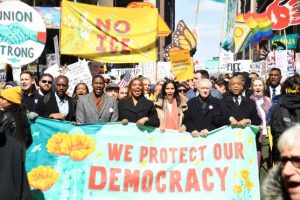
New Yorkers from the Columbus Circle area poured into the streets this weekend, joining more than eight million people across the United States in a sweeping “No Kings” protest, a coordinated demonstration aimed at defending democratic norms and calling attention to a wide range of national concerns. Organizers described the movement as a collective stand against what they view as growing threats to constitutional principles, civil rights, and America’s role on the world stage.
Participants in New York’s more than 150 protests carried signs, chanted through megaphones, and marched with a sense of urgency that echoed similar gatherings in cities from Chicago to Los Angeles. Protesters said they were motivated by a shared belief that the country is veering away from long standing democratic traditions. The phrase “No Kings” became the rallying cry, symbolizing opposition to any concentration of power that they believe undermines the balance between the three branches of government.
Those who marched in New York included; Rev Al Sharpton, NY Attorney General Leticia James, Actor and Director Robert De Niro and other politicians, community leaders and regular New Yorkers.
Among the issues highlighted was the ongoing war in Iran, which demonstrators described as unnecessary, destabilizing, and costly in both human and economic terms. Many participants expressed fears that prolonged conflict could further strain international alliances and deepen global tensions.
Another major theme was the treatment of immigrants and American citizens by immigration enforcement agencies. Protesters criticized what they view as harsh or discriminatory practices, arguing that such actions erode the nation’s moral standing and violate basic human rights. Calls for humane reform echoed throughout the crowd.
Economic concerns also fueled the demonstrations. Protesters cited tariffs and trade disruptions as contributing to rising costs for families and small businesses. Some argued that these policies have strained relationships with key allies and weakened the United States’ global economic position.
Changes to historic buildings and institutions in Washington, D.C., along with what participants described as discouragement of diversity, equity, and inclusion initiatives, were also central to the protest. Many attendees said these shifts represent an attempt to rewrite or erase important aspects of American history, particularly the experiences and accomplishments of Black Americans. Demonstrators voiced alarm over efforts they believe are aimed at removing references to slavery from institutions and publications, calling such actions an attempt to sanitize the past.
Concerns about voting rights were another driving force. Protesters warned that efforts to restrict or complicate voting access threaten the foundation of representative government. They argued that any attempt to infringe on voting rights, whether through legislation, administrative changes, or political pressure, undermines the legitimacy of elections.
Corruption in Washington, allegations of war crimes, criticism of NATO and allied nations, and what protesters described as disregard for constitutional limits rounded out the long list of grievances. For many, the protest was not about a single issue but about a broader fear that American democracy is being weakened from within.
As the crowds dispersed, organizers vowed that this would not be the last demonstration. They described the “No Kings” movement as a long term effort to ensure that the nation remains committed to equality, accountability, and the rule of law.
Photos by Seitu Oronde