Categories: Articles,

As part of its centennial celebration, the Schomburg Center invites readers to explore 100 Black Voices, a specially curated list of books recommended by some of today’s most celebrated Black writers, artists, and cultural leaders. Organized by the Jean Blackwell Hutson Research and Reference Division, the list highlights works that have shaped lives, sparked imaginations, and deepened understanding of the Black experience across the diaspora.
This collection is more than a reading list, it’s a tribute to the power of storytelling, memory, and cultural continuity. It reflects the Center’s enduring mission: to uplift Black voices, preserve Black history, and inspire future generations.
As the Schomburg Center celebrates its 100th year, it continues to stand as a beacon of knowledge, creativity, and community. Its centennial is not only a milestone but an invitation to engage more deeply with the stories that define and enrich our shared history.
To explore the full 100 Black Voices list and discover more ways to celebrate the Schomburg Centennial, visit the New York Public Library’s feature at: https://www.nypl.org/blog/2026/01/29/instant-access-selection-schomburg-100-black-voices-list
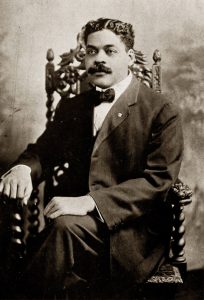
A hundred years ago, a visionary collector named Arturo Alfonso Schomburg set in motion a legacy that would transform how the world understands Black history, culture, and intellectual achievement. Today, the Schomburg Center for Research in Black Culture, one of the New York Public Library’s most treasured research institutions—marks its centennial, celebrating a century of preservation, scholarship, and cultural leadership.
Arturo Schomburg, a Puerto Rican–born historian, bibliophile, and activist of African and Afro‑Caribbean descent, devoted his life to collecting books, manuscripts, artworks, and artifacts that documented the global Black experience. At a time when mainstream institutions dismissed or erased Black contributions, Schomburg insisted on the opposite: that Black history was rich, expansive, and essential to world civilization.
His personal collection, tens of thousands of items, was acquired by the New York Public Library in 1926. That acquisition became the foundation of what would grow into the Schomburg Center. Schomburg himself served as curator, shaping the early direction of the division and ensuring that its mission remained rooted in truth‑telling and cultural pride.
Over the past century, the Schomburg Center has evolved into a world‑renowned research library and cultural hub. Its collections now span millions of items, from rare manuscripts and photographs to films, artworks, and oral histories. Scholars, artists, students, and community members from around the world come to Harlem to explore the archives and engage with exhibitions, public programs, and performances.
The Center’s influence extends far beyond its walls. It has shaped academic fields, inspired generations of writers and thinkers, and served as a guardian of Black memory. Figures such as Jean Blackwell Hutson—who led the Center for more than three decades—expanded its collections and cemented its reputation as a premier institution for Black studies.