Categories: Articles, Hazel Rosetta Smith,
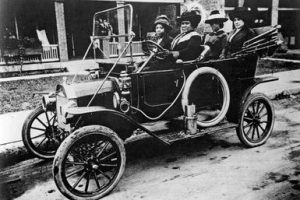
The woman who would become Madame C.J. Walker was born Sarah Breedlove in Delta, Louisiana, December 23, 1867, to Owen and Minerva Anderson Breedlove, former slaves-turned sharecroppers after the Civil War.
Orphaned at age seven, Walker lived with her older sister Louvenia, and the two worked in the cotton fields. At age fourteen, she married Moses McWilliams. When her husband died in 1887, Walker became a single parent of two-year old daughter Lelia (later known as A’Lelia).
Seeking a way out of poverty, Walker moved to St. Louis, Missouri, where her four brothers were barbers. There, she worked as a laundress and cook.
She joined the African Methodist Episcopal Church, where she met leading Black men and women, whose education and success likewise inspired her. In 1894, she married John Davis, but the marriage was troubled, and the couple later divorced.
Struggling financially, facing hair loss, and feeling the strain of years of physical labor, Walker’s life took a dramatic turn in 1904. That year, she not only began using African American businesswoman Annie Turbo Malone’s “The Great Wonderful Hair Grower,” but she also joined Malone’s team of Black women sales agents.
Moving next to Denver, she worked as a cook
for a pharmacist, from whom she learned the basic chemistry that allowed her to perfect an ointment that healed dandruff and conditioned hair.
In 1908 she married Charles Joseph Walker, and with $1.25, launched her own line of hair products and straighteners for African American women, “Madam Walker’s Wonderful Hair Grower.” Initially, Walker’s husband helped with advertising and establishing a mail order business.
She began achieving local success with what later became known as the “Walker Method” or the “Walker System of Beauty Culture.” Thenceforward, she was known as Madam C.J.
After the pair divorced in 1910, she relocated to Indianapolis and built a factory for her Walker Manufacturing Company.
An advocate of Black women’s economic independence, she opened training programs in the “Walker System” for her national network of licensed sales agents and “beauty culturists” throughout the southern and eastern United States, who earned healthy commissions. She opened the Lelia College of Beauty Culture, a school named after her daughter.
Drawn to the prosperous Black business community in Indianapolis, she relocated the headquarters of the Madam C.J. Walker Manufacturing Company from Denver in 1910, and divorced her husband.
She continued to develop her business by traveling across the United States and providing career opportunities and economic independence for thousands of African American women who otherwise would have been consigned to jobs as maids, cooks, laundresses, and farmhands.
In 1913 she expanded internationally, establishing beauty schools in the Caribbean and Central America. Madame founded the National Negro Cosmetics Manufacturers Association in 1917.
Walker employed 40,000 African American women and men in the US, Central America, and the Caribbean.
Walker simultaneously made her mark as a philanthropist, most notably with her $1,000 gift to the African American Young Men’s Christian Association (YMCA) building fund in Indianapolis and her $5,000 contribution to the National Association for the Advancement of Colored People’s (NAACP’s) anti-lynching fund in 1919.
She provided numerous annual scholarships for students at several Black colleges and boarding schools and financial support for orphanages, retirement homes, and the fund to preserve Frederick Douglass’s home in the Anacostia neighborhood of Washington, D.C.
She also became politically active, speaking out against lynching at the Negro Silent Protest Parade and advocating for the rights of African American soldiers who served in France during World War I.
Walker came to New York just before World War I and built an Italianate mansion, Villa Lewaro, overlooking the Hudson River at Irvington. It was designed by Vertner Tandy, the first African American architect registered in New York State. The mansion is a national historic landmark and is officially listed as a treasure for National Trust for Historic Preservation.
Other real estate investments were her Harlem townhouse (the site of her New York beauty school as well as the Dark Tower, a cultural salon hosted by her daughter, A’Lelia Walker, during the Harlem Renaissance of the 1920s).
After her death on May 25, 1919, in Irvington, New York, her daughter A’Lelia constructed the Walker Building in Indianapolis, which housed the offices of Walker Enterprises and another historic landmark, The Madame Walker Theatre Center.
Entrepreneur, philanthropist, and activist, Madam C.J. Walker rose from poverty in the South to become one of the wealthiest African American women of her time in the annals of American history.
Archive Photos/Getty Images